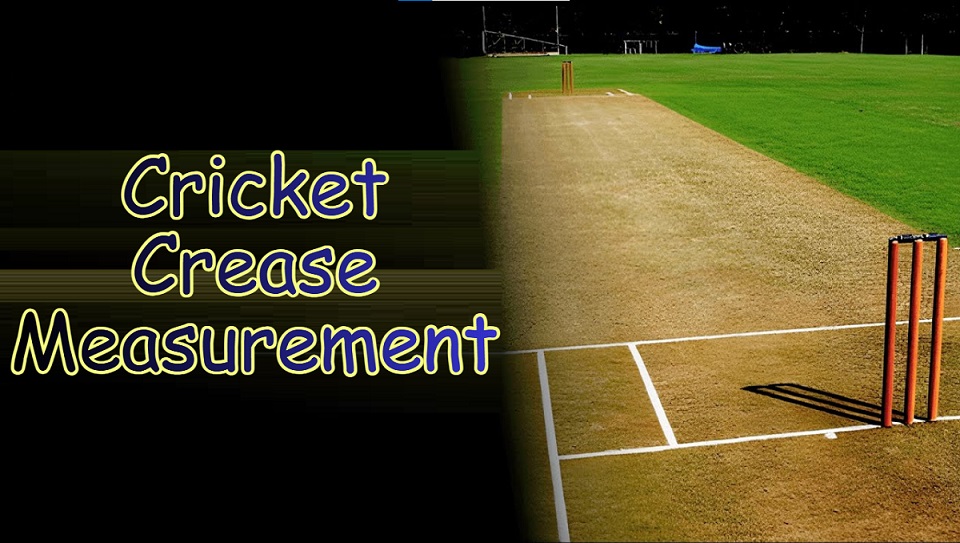

Introduction: Understanding Cricket Crease Measurement
Cricket is an exercise in which precision is required in each element, from bowling accuracy to batting approach. One of the most essential but regularly disregarded factors of the sport is the cricket crease measurement. Every healthy carried out under professional policies follows strict tips described by the International Cricket Council (ICC), ensuring fairness and consistency across formats.
The creases on a cricket pitch are not simply traces drawn on the floor; they outline the legality of deliveries, decide run-outs, affect batting stance, and play a critical role in umpiring alternatives. Without properly measured creases, the game can’t be played efficiently.
Table of Contents
In this complete guide, you can study everything about cricket crease measurement, including actual dimensions, styles of creases, marking methods, regulations, and their importance in modern cricket.
What is a Cricket Crease?
A cricket crease is a line marked on the pitch that allows distinct zones for batting and bowling. These lines are essential for gameplay and are used to determine whether or not a batsman is secure, a bowler has bowled legally, or a fielder has completed a run-out successfully.
There are 4 number one creases on a cricket pitch:
- Bowling crease
- Popping crease
- Return crease
- Protected place (informal, however important)
Each crease has particular measurements and capabilities, governed by global cricket legal guidelines.
Standard Cricket Pitch Dimensions
Before facts crease measurements, it’s miles vital to know the overall pitch size.
| Component | Measurement |
|---|---|
| Total pitch length | 22 yards (20.12 meters) |
| Pitch width | 10 feet (3.05 meters) |
| Distance between stumps | 22 yards |
| Height of stumps | 28 inches |
These measurements shape the muse on which crease traces are drawn.
Types of Cricket Creases Explained
Bowling Crease
The bowling crease is the road on which the stumps are placed. It runs at some point of the pitch and is parallel to the popping crease.
Key Features
- Passes through the middle of the 3 stumps
- Extends at least eight feet eight inches (2.64 meters) on either aspect of the center stump
- Used to judge the front-foot no-balls
Measurement Table
| Aspect | Measurement |
|---|---|
| Length (minimum) | 8 ft 8 in each side |
| Position | Along stumps |
| Orientation | Parallel to the popping crease |
Popping Crease
The popping crease is the maximum critical crease for batsmen. It determines whether or not or not a batsman is safe or out.
Key Features
- Drawn parallel to the bowling crease
- Located 4 toes (1.22 meters) in front of the bowling crease
- Extends throughout the pitch and beyond
Measurement Table
| Aspect | Measurement |
|---|---|
| Distance from the bowling crease | 4 feet |
| Orientation | Parallel |
| Length | Extends beyond the return crease |
Return Crease
The pass back crease is drawn perpendicular to the bowling crease and defines the bowler’s shipping area.
Key Features
- Used to choose considerable balls and illegal deliveries
- Bowler needs to stay inside this crease while turning in the ball
Measurement Table
| Aspect | Measurement |
|---|---|
| Distance from the center line | 4 ft 4 in |
| Orientation | Perpendicular |
| Length | Extends behind the popping crease |
Complete Cricket Crease Measurement Table
| Crease Type | Distance/Length | Orientation | Purpose |
|---|---|---|---|
| Bowling Crease | 8 ft 8 in each side | Horizontal | Defines bowling line |
| Popping Crease | 4 ft from the bowling crease | Horizontal | Batsman safety |
| Return Crease | 4 ft 4 in from center | Vertical | Bowling legality |
Importance of Cricket Crease Measurements
Ensuring Fair Play
Proper crease size ensures that each batsman and bowler carries out under the same conditions. Any deviation can bring about unfair blessings.
Umpiring Decisions
Umpires rely heavily on crease lines to make selections, including:
- No-ball calls
- Run-outs
- Stumpings
Player Positioning
Creases manual players in positioning themselves correctly, especially batsmen whilst going through deliveries.
How Cricket Creases are Marked
Materials Used
- White chalk or lime powder
- Specialized marking paint
- Measuring tape
Step-by-Step Marking Process
- Measure 22 yards for the pitch period
- Mark the center issue for stumps
- Draw a bowling crease through the stumps
- Measure 4 ft in advance for popping the crease
- Draw move again, creases perpendicular
Diagram Explanation of Crease Layout
Although diagrams are usually visible, here’s a textual instance:
- Bowling crease in the middle
- Popping the crease four toes in advance
- Return creases on each facet, forming a rectangle
This layout guarantees all gameplay rules are maintained.
ICC Rules on Cricket Crease Measurement
The International Cricket Council strictly enforces crease measurements underneath the Laws of Cricket (Law 7 and Law 8).
Key ICC Rules
- All measurements need to be unique
- Lines must be virtually seen
- Creases want to be maintained at some point in the suit
Role of Creases in Gameplay
Batting
The popping crease determines whether or not a batsman is secure. If any part of the bat or body is grounded at the back of the crease, the batsman is not always out.
Bowling
The bowler should hold their front foot behind the popping crease. Crossing it results in a no-ball.
Fielding
Fielders use crease strains for run-out selections and positioning.
Common Mistakes in Crease Measurement
| Mistake | Impact |
|---|---|
| Incorrect distance | Invalid gameplay |
| Faint markings | Umpire confusion |
| Uneven lines | Player disadvantage |
Differences Between Formats
While the crease measurements remain equal at some point of codecs like Test, ODI, and T20, their significance varies:
| Format | Importance of Crease |
|---|---|
| Test | High (strategy-based) |
| ODI | Moderate |
| T20 | Very high (fast gameplay) |
Historical Evolution of Cricket Crease
Cricket creases were no longer constantly standardized. Early cricket used hard markings; through the years, suggestions developed for consistency.
The advent of strict measurements advanced equity and professionalism in the game.
Modern Technology and Crease Monitoring
Today, generation plays a primary role in tracking crease usage:
- Hawk-Eye for no-ball detection
- UltraEdge for bat-ground contact
- Third umpire choices
Practice Tips for Ground Staff
The ground team of workers plays a crucial role in preserving crease accuracy.
Tips
- Use a calibrated measuring device
- Re-mark creases for the duration of breaks
- Ensure visibility beneath floodlights
FAQs on Cricket Crease Measurement
What is the space between the popping crease and the bowling crease?
It is exactly 4 ft (1.22 meters).
Why is the move back crease vital?
It guarantees bowlers’ supply inside the crook boundaries.
Who defines crease measurements?
The International Cricket Council governs all legitimate rules.
Conclusion
Cricket crease length is an essential element of the sport that guarantees equity, accuracy, and consistency. From defining batting safety to judging bowling legality, creases play a vital role in each suit.
Understanding the one measurements is vital not only for players and umpires but additionally for fanatics who need a deeper appreciation of the sport. Whether you’re playing at a professional level or putting in place a neighborhood pitch, following respectable crease dimensions guarantees the spirit of cricket is maintained.