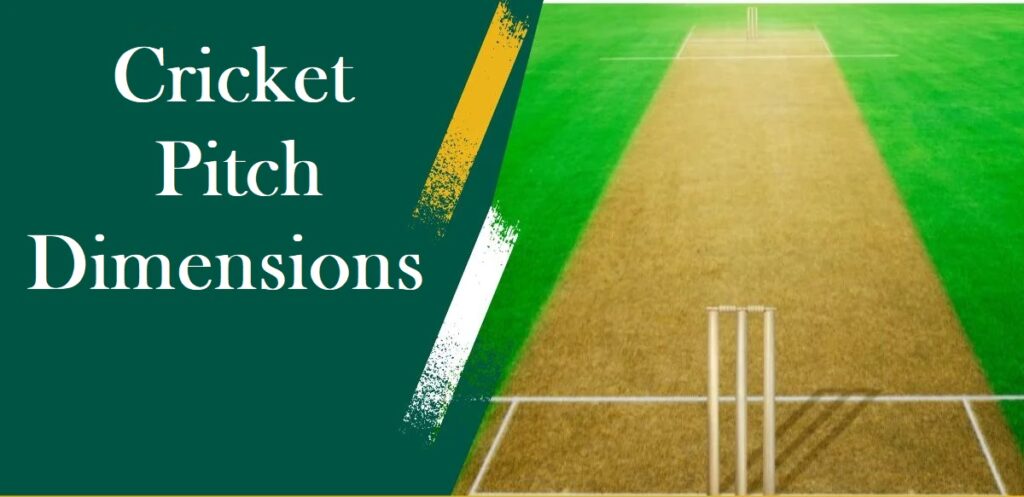

Cricket Pitch Dimensions
Cricket is played on a huge ground, but the primary pitch is the most essential area of the game. It is where bowlers deliver the ball, batters face deliveries, and wickets are taken. Understanding cricket pitch dimensions lets players, coaches, floor body of workers, and cricket lovers study the way the sport is organised.
According to the Laws of Cricket, the usual pitch measures 22 yards (20.12 metres) in length and 10 ft (3.05 metres) in width. These dimensions practice to the same antique pitch applied in worldwide cricket, which includes Test fits, One Day Internationals (ODIs) and Twenty20 cricket, problem to the applicable opposition’s playing situations.
Table of Contents
The pitch isn’t like the entire cricket field. The field consists of the gambling field, boundary, and outfield, while the pitch is the specifically organized square strip within the centre. Its dimensions and crease markings are defined through the Laws of Cricket.
Standard Cricket Pitch Dimensions
The famous cricket pitch has fixed dimensions under the Laws of Cricket. Its length is measured between the various 2 bowling creases, and its width is measured across the prepared playing strip.
| Pitch Measurement | Standard Dimension |
|---|---|
| Pitch length | 22 yards |
| Length in feet | 66 feet |
| Length in metres | 20.12 metres |
| Pitch width | 10 feet |
| Width in metres | 3.05 metres |
| Bowling crease length | 8 feet 8 inches |
| Popping crease distance from bowling crease | 4 feet |
| Return crease position | 4 feet 4 inches from the middle-stump centre line on each side |
| Minimum artificial pitch length | 58 feet (17.68 metres) |
| Minimum artificial pitch width | 6 feet (1.83 metres) |
These figures describe the identical antique pitch and its principal markings. Artificial pitches have separate minimum requirements, even as junior cricket pitch lengths may be decided through the relevant national governing body.
How Long Is a Cricket Pitch?
A standard cricket pitch is 22 yards long, the same as 66 feet or about 20.12 metres. This measurement is taken between the various bowling creases at the 2 ends of the pitch.
The 22-yard distance is essential as it determines the gap between the bowler’s bowling crease and the batter’s crease. Bowlers use this distance to deliver the ball, at the same time as batters decide its line, length, speed, and speed.
The distance is fashionable throughout the number one codes of cricket. A Test match pitch is not longer than a T20 pitch really because the match lasts longer. The playing format changes the rules and technique, not the pitch duration.
How Wide Is a Cricket Pitch?
The length of a cricket pitch is 10 feet huge, which is about 3.05 metres.
The width is defined using imaginary traces on both aspect of the line becoming a member of the centres of the 2 center stumps. These imaginary limitations are located 5 ft (1.50 metres) from the number one line, subject to the provisions for neighbouring synthetic pitches.
This dimension refers to the pitch itself, not the width of the complete cricket ground. The outfield extends a whole lot farther on each facet.
Cricket Pitch Dimensions in Different Formats
The primary pitch dimensions stay the same in men’s and women’s worldwide cricket and at some stage in Test, ODI, and T20 formats, depending on the relevant playing situations.
| Cricket Format | Standard Pitch Length | Standard Pitch Width |
|---|---|---|
| Test cricket | 22 yards | 10 feet |
| One Day International (ODI) | 22 yards | 10 feet |
| T20 International | 22 yards | 10 feet |
| Domestic senior cricket | Normally 22 yards | Normally 10 feet |
| Junior cricket | May vary under governing-body rules | Depends on the applicable rules and facilities |
Junior competitions may additionally use shorter pitches to fit players’ ages and improvement. Organisers need to are trying to find advice from their governing body’s guidelines earlier than making prepared a junior cricket pitch.
Cricket Pitch Crease Measurements
Creases are white lines marked around each set of stumps. They help umpires select whether bowlers supply the ball legally and whether or now not batters are internal or outside their floor.
There are 3 fundamental sorts of crease markings at every wicket: the bowling crease, the popping crease and the back creases.
1. Bowling Crease
The bowling crease is the line that marks the stop of the pitch. The 3 stumps at that end are positioned along this line.
Under the standard Laws of Cricket, the bowling crease is 8 feet 8 inches (2.64 metres) long. Its characteristic is essential for checking the bowler’s shipping and organising the limits of the pitch.
2. Popping Crease
The popping crease is parallel to the bowling crease and is placed 4 ft (1.22 metres) in front of it.
It is one of the most vital markings for batters and bowlers. When a batter runs, the popping crease permits decide whether the batter has made their floor. It is likewise relevant while umpires check fantastic kinds of dismissal and no-ball choices.
The popping crease ought to extend as a minimum of 6 feet (1.83 metres) on both sides of the imaginary line joining the centres of the 2 center stumps. Under the Laws, it is considered limitless in length.
3. Return Creases
Return creases run at right angles to the popping crease. Their inner edges are located 4 feet 4 inches (1.32 metres) on either side of the imaginary line turning into a member of the centres of the middle stumps.
They extend from the popping crease to a minimum of 8 feet (2.44 metres) within the back of it and are considered limitless in period underneath the Laws.
Return creases are in particular critical for judging the bowler’s delivery. They assist in establishing the place in which the bowler’s lower returned foot should be located for a prison delivery.
Cricket Pitch Wicket Dimensions
A wicket includes 3 wooden stumps with bails located on top. One wicket is positioned at each end of the pitch.
| Wicket Measurement | Standard Dimension |
|---|---|
| Number of stumps per wicket | 3 |
| Height of stumps above the playing surface | 28 inches (71.12 cm) |
| Width of the wicket | 9 inches (22.86 cm) |
| Number of wickets on the pitch | 2 |
| Number of bails per wicket | 2 |
The stumps are called the off stump, center stump, and leg stump from the batter’s perspective. The wicket’s popular peak and width assist in preserving consistency in the game.
The bails rest on top of the stumps and are designed to fall whilst the wicket is fairly positioned as per the Laws of Cricket. Special gambling conditions can observe to certain device, which includes large bails utilized in some competitions.
Does Cricket Pitch Size Change for Test, ODI and T20 Matches?
No. The state-of-the-art pitch length and width do now not change actually because of the reality a in shape is completed in a one among a kind format.
Test cricket, ODI cricket and T20 cricket use the identical pitch dimensions. The variations amongst the different formats relate mainly to the range of overs, fit period, fielding restrictions and other playing situations.
For instance, a T20 healthful typically lasts a extraordinary deal much less time than a Test match, but the bowler however can provide from the same fashionable distance. Similarly, an ODI pitch follows the identical fundamental measurements as a Test match pitch.
The pitch ground, but, can vary significantly from one venue to a few different. Grass, moisture, soil composition, rolling, and weather conditions can affect how the ball behaves.
Types of Cricket Pitches
Cricket pitches may be organized the use of different surfaces, depending at the venue, weather, facilities and degree of opposition.
1. Grass Pitch
A grass pitch is not unusual in expert cricket. Its behaviour is based upon the quantity of grass, moisture, soil composition and coaching. Some grass pitches provide seam movement, on the equal time as others offer a pretty even ground for batting.
2. Dry Pitch
A dry pitch might also grow to be tougher or more abrasive as a match progresses. Depending on its soil and guidance, it can assist spin bowlers in extracting flip and might become extra tough for batters.
3. Dusty Pitch
A dusty floor can help spin bowling whilst the ball grips and turns. However, not every dry or dusty pitch behaves in the identical way; the soil and training make a good-sized distinction.
4. Artificial Pitch
Artificial pitches are regularly utilized in faculties, education facilities, parks and enjoyment cricket. Under the same antique Laws, a synthetic gambling ground ought to be at least 58 ft (17.68 metres) long and 6 ft (1.83 metres) wide. The appropriate governing body may additionally specify extra requirements for a specific competition.
What Is the Difference Between a Cricket Pitch and a Cricket Ground?
The pitch and the ground are two wonderful elements of a cricket venue. The pitch is the important organized strip wherein the bowler offers you the ball and the batter plays it. The ground consists of the broader gambling location, in conjunction with the outfield and boundary.
Unlike the pitch, the whole cricket ground does not have one generic consistent length and width. Ground dimensions can range among stadiums, and boundary positions rely on the venue and relevant opposition policies.
For this reason, the usual 22-yard pitch dimensions need to be adjusted with the distance from the pitch to the boundary.
How Is a Cricket Pitch Prepared?
Preparing a cricket pitch calls for careful planning and preservation. The floor authority is answerable for selecting and getting ready the pitch earlier than the fit. During the match, the umpires manage its use and protection under the applicable Laws and gambling situations.
Pitch coaching usually involves the following sports:
- Soil choice: Suitable soil is chosen in line with the venue and preferred playing traits.
- Levelling: The floor is levelled to help create a level playing area.
- Rolling: Rolling can assist in compacting the floor and has an impact on its hardness.
- Grass manipulation: The grass is maintained in keeping with the deliberate pitch developments.
- Moisture control: Watering and drying are controlled to prepare the surface.
- Final inspection: The pitch is checked for consistency and safety before play.
The intention is to supply a floor that is appropriate for the match and safe for game enthusiasts. Pitch guidance techniques range in line with close-by situations and opposition necessities.
Why Are Standard Cricket Pitch Dimensions Important?
Standard pitch dimensions assist ensure that cricket is carried out underneath steady situations at distinctive venues. Players can prepare for the identical number one distance among wickets, and umpires can apply the Laws continually.
The measurements moreover depend at the same time as building cricket grounds, marking creases, installing wickets and getting prepared education centers. Incorrect markings can have an effect on decisions associated with run-outs, no-balls and different factors of the sport.
For junior cricket and artificial surfaces, organisers ought to take a look at the applicable governing frame’s regulations before the usage of the same antique senior pitch measurements.
Frequently Asked Questions (FAQs)
What are the usual cricket pitch dimensions?
An elegant cricket pitch is 22 yards (20.12 metres) long and 10 feet (3.05 metres) wide.
How many ft long is a cricket pitch?
A standard cricket pitch is 66 ft long, measured between the bowling creases.
How many metres big is a cricket pitch?
The standard width is set at 3.05 metres.
What is the gap between the popping crease and bowling crease?
The popping crease is 4 feet (1.22 metres) in front of and parallel to the bowling crease.
Are cricket pitch dimensions the same in Test, ODI and T20 cricket?
Yes. The standard pitch dimensions remain the same across those formats, subject to the applicable playing conditions.
What is the minimal length of a synthetic cricket pitch?
Under the standard Laws of Cricket, an synthetic gambling floor need to be as a minimum 58 feet (17.68 metres) lengthy and 6 feet (1.83 metres) significant.
Is the complete cricket field 22 yards lengthy?
No. The 22-yard length refers back to the pitch, not the entire cricket field. The outfield and boundary cover a far larger area.
Conclusion
Cricket pitch dimensions are a critical part of the Laws of Cricket. The desired pitch measures 22 yards (20.12 metres) long and 10 feet (3.05 metres) wide. The bowling crease, popping crease, cross-bat creases and wickets each have defined measurements that help hold consistency and equity.
Whether you’re a cricket fan, player, trainer or ground organiser, understanding those measurements makes it simpler to learn the hints and prepare a suitable playing region. For proper fits, always seek advice from the cutting-edge Laws of Cricket and the relevant competition’s gambling conditions for any additional requirements.