
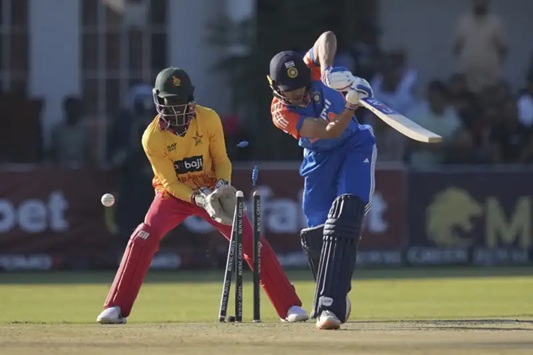

Two Very Different Indian Squads, One Familiar Opponent
The India national cricket team vs Zimbabwe national cricket team players story spans two distinct chapters within just two years. When India landed in Harare in July 2024, the squad looked nothing like the unit that would later take the field at Chennai’s MA Chidambaram Stadium for the T20 World Cup 2025/26 Super Eights. Shubman Gill captained a young, experimental side in Zimbabwe, doing so in T20Is for the very first time. His squad included several cricketers on debut, names that casual fans might not have recognized alongside more established indian cricketers: Dhruv Jurel, Riyan Parag, and Abhishek Sharma all played their first T20I in the opening match of that tour on 6 July 2024. Sai Sudharsan got his first cap a day later. The World Cup 2026 squad, by contrast, brought back the senior architecture: Suryakumar Yadav as captain, Jasprit Bumrah, Hardik Pandya, Arshdeep Singh, Axar Patel, Varun Chakravarthy. A rotation experiment versus a tournament-winning machine.
For anyone wanting to understand the betting angles on these matches, the World Cup crypto betting guide by TipsGG breaks down how the squads’ contrasting profiles affect odds and value across different match formats.
The 2024 Series: Zimbabwe’s Upset and India’s Ruthless Response
India won the five-match T20I series 4-1, but that single Zimbabwe victory in the opener carries more weight than the scoreline suggests. Zimbabwe scored 115/9 and bowled India out for just 102, winning by 13 runs. Tendai Chatara took 3 wickets for 16 in 3.5 overs; India’s batting crumbled in conditions that suited seam. Ravi Bishnoi was brilliant with the ball, taking 4 wickets for 13 runs, but it wasn’t enough to salvage the chase.
India’s answer in the second match was brutal. They posted 234/2, and Abhishek Sharma announced himself with a maiden T20I century: 100 off 47 balls. Zimbabwe replied with 134, losing by exactly 100 runs, which equalled their joint-biggest defeat by runs in T20 internationals at the time. The third match saw India win by 23 runs (182/4 vs 159/6), and that victory was recorded as India’s 150th in men’s T20 internationals. The fourth T20I was almost embarrassing: Yashasvi Jaiswal made 93 not out off 53 balls and India chased 153 without losing a wicket, reaching 156/0 in 15.2 overs.
Zimbabwe’s captain Sikandar Raza had personal milestones to take from the series. He became the first Zimbabwean cricketer to score 2,000 runs in T20Is during the fourth match, and he had already reached 5,000 T20 runs across all formats in the third game. Individual excellence, team defeat.
Zimbabwe’s Squad Then and Now
The 2024 Zimbabwe squad had genuine depth on paper: Brian Bennett, Tadiwanashe Marumani, Dion Myers, Blessing Muzarabani, Richard Ngarava, Wesley Madhevere, Luke Jongwe and Milton Shumba all traveled for that series. Sikandar Raza captained throughout. For the 2026 World Cup Super Eights match in Chennai, the predicted Zimbabwe XI included Bennett at the top, Marumani as wicketkeeper, Myers, Ryan Burl, Raza as captain, Tony Munyonga, Tashinga Musekiwa, Brad Evans, Graeme Cremer, Ngarava and Muzarabani. The spine of the side remained recognizable across both years, which matters when you’re trying to read head-to-head matchups.
Bennett is the name that keeps surfacing. In the Chennai Super Eights match on 26 February 2026, he scored 97 not out off 59 balls, hitting 8 fours and 6 sixes, in a losing cause. India had posted 256/4 and Zimbabwe replied with 184/6. The margin was 72 runs. Bennett’s innings was the kind of performance you’d expect from a cricketer name that should be far better known outside southern Africa.
India’s Batting Firepower and the Arshdeep Factor
Abhishek Sharma carried his form from the 2024 Zimbabwe tour directly into the World Cup cycle. He scored 55 off 30 balls in India’s 256/4 innings at Chennai. Hardik Pandya was named Player of the Match after an unbeaten 50 off just 23 balls, the sort of acceleration at the death that no bowling attack in world cricket handles comfortably. The India predicted XI for that match, as listed by The Indian Express, read: Abhishek Sharma, Sanju Samson (wk), Ishan Kishan, Tilak Varma, Suryakumar Yadav (c), Shivam Dube, Hardik Pandya, Axar Patel, Arshdeep Singh, Varun Chakravarthy, Jasprit Bumrah.
Arshdeep Singh is the key bowling battle to focus on. He took 3 wickets for 24 runs in 4 overs during Zimbabwe’s chase at Chennai, a 6.00 economy rate that looks almost generous on paper but was devastating in context against a side needing 257. His left-arm angle at the top of the innings, combined with Bumrah’s variations, gives India a new-ball combination that most teams in world cricket struggle with. Varun Chakravarthy took 1 wicket for 35 in his four overs, which is less impressive, though Zimbabwe’s batting didn’t collapse to spin the way some opponents do.
Head-to-Head Pattern and What the Numbers Say
Between 2022 and early 2026, India and Zimbabwe played eight limited-overs matches against each other. India won seven, Zimbabwe won one. That one win was the first T20I in Harare in July 2024. The broader historical picture shows Zimbabwe winning roughly 16-17% of their limited-overs matches against India across all formats, a figure that reflects the structural gap between the sides without dismissing Zimbabwe’s capacity for individual brilliance.
The comparison with other high-profile rivalries is instructive. The kind of statistical depth you’d apply to, say, sunrisers hyderabad vs rajasthan royals stats in the IPL, or the delhi capitals vs mumbai indians timeline across seasons, applies equally to international head-to-heads when you’re building a genuine picture of form and matchup tendencies. Zimbabwe are not a side that folds quietly. Bennett’s 97 not out proved that. Raza’s 31 off 21 balls in the same chase showed he still competes at this level. The gap between 184 and 256 is the real story, a batting depth problem that no single innings can fully mask.
India’s squad evolution from the 2024 tour to the 2026 World Cup Super Eights represents exactly the kind of temporal shift that separates a development series from a tournament context. The young side that lost that first Harare match grew into something far more dangerous. Zimbabwe’s core stayed largely intact, which is admirable for a smaller cricket nation, but the ceiling remains visible whenever India bat first and post totals above 230.